
Why Ground Spraying with Big-Brand Pesticides Continues to Trigger F&B Complaints — Deconstructing the Spatio-Temporal Gap in Traditional PCO
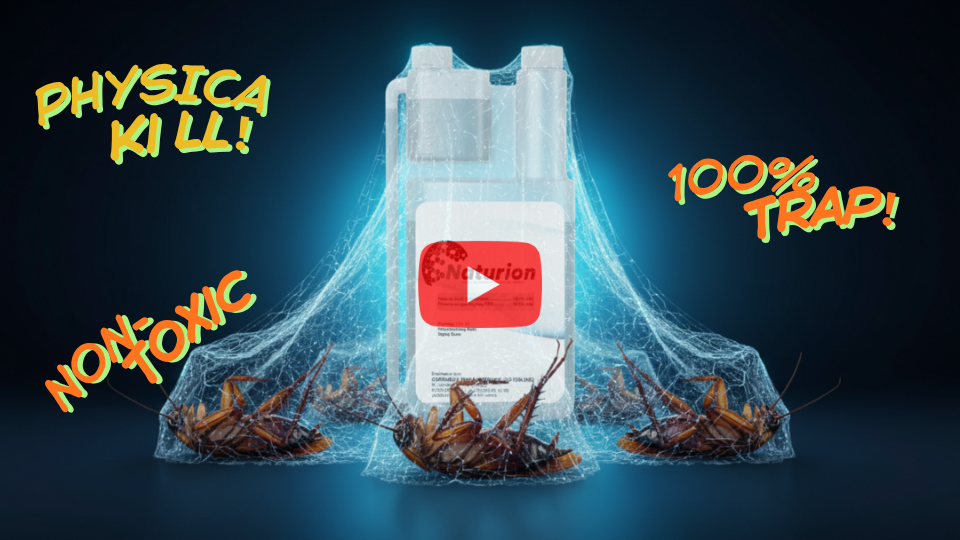
In the Malaysian pest control (PCO) sector, commercial kitchens, central catering facilities, and F&B establishments represent lucrative but highly volatile accounts characterized by chronic customer complaints. To safeguard service quality, many PCO companies heavily invest in premium, international-grade chemical insecticides (pesticides) and strictly execute comprehensive ground spraying every month or fortnight.
Yet, despite aggressive dosing and soaring chemical expenditures, operators are constantly bombarded with intense client complaints regarding persistent infestations, particularly the German cockroach (Blattella germanica).
While the industry routinely blames these failures on "chemical resistance" or "substandard kitchen hygiene," a strict cross-examination of the micro-environment, regulatory constraints, and pest behavioral ecology reveals a different truth: The recurrent failure of traditional chemical management in F&B environments is not a failure of toxicity, but the logical consequence of a structural "spatio-temporal gap" inherent to traditional pesticides.
1. The Spatial Gap: Regulatory Boundaries vs. Core Harborages
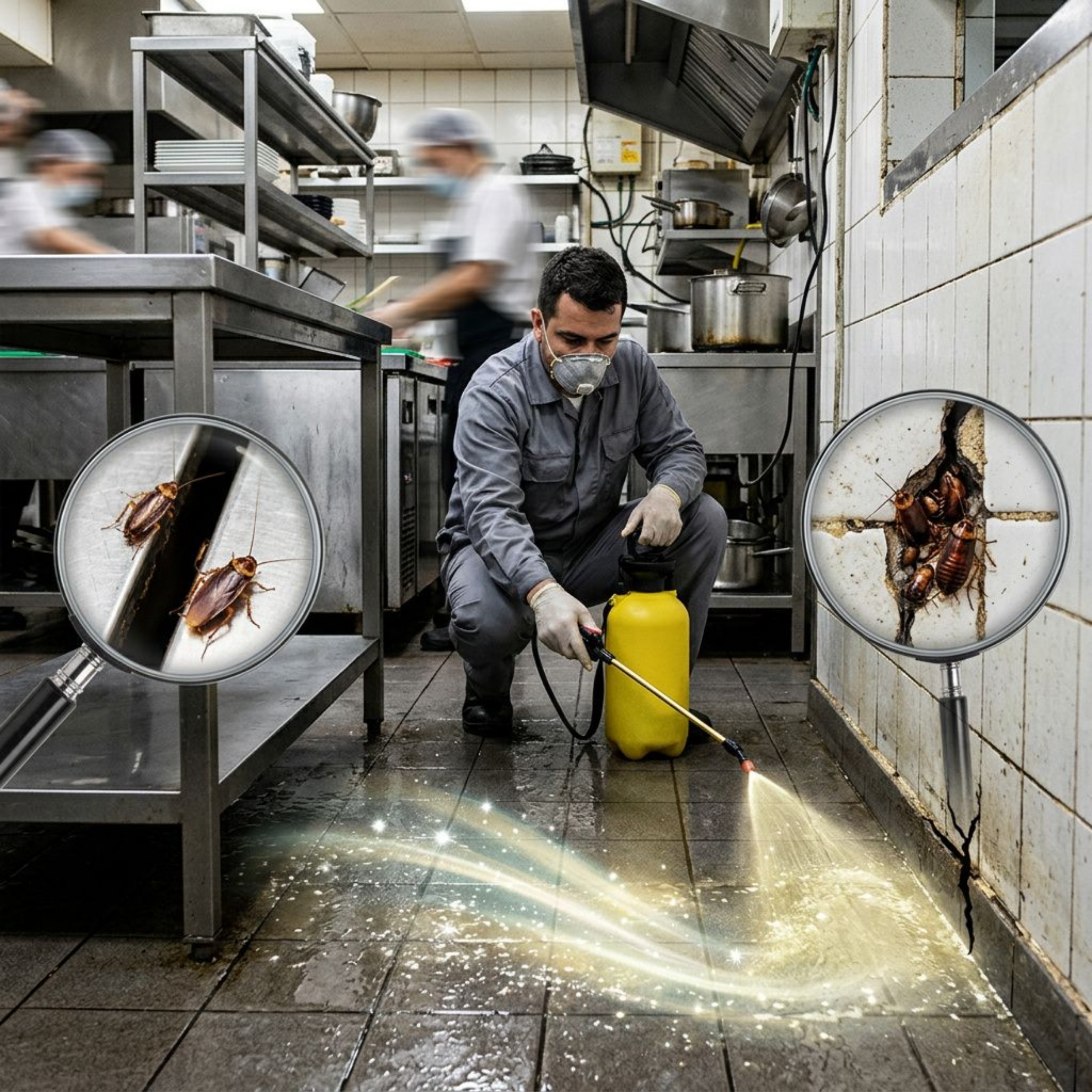
Traditional chemical insecticides rely intrinsically on metabolic toxicity to disrupt a pest’s physiological systems. Because they are inherently hazardous, they face an unyielding regulatory iron curtain enforced by the Ministry of Health (MOH), as well as stringent global food safety standards like HACCP and ISO 22000: Toxic chemical agents are strictly prohibited from being applied to any surface that may directly or indirectly contact food, or within open mechanical assemblies.
To maintain absolute compliance and safety, a PCO technician’s lawful intervention zone is effectively restricted to the kitchen floor, baseboards, and drainage perimeters. In the industry, this is known as being "confined to the floor."
And this is precisely where the system breaks down.
Modern F&B kitchens are predominantly constructed from industrial stainless steel equipment. The complex, folded seams underneath stainless steel worktables, overlapping structural joints, hollow square table legs, fractured wall tile grouting, and the localized motor housing assemblies of industrial dishwashers or commercial ovens constitute the actual "sanctuary" where cockroaches aggregate, breed, and thrive.
Every experienced PCO technician knows these stainless steel gaps house dense cockroach populations. Yet, constrained by the toxic profile of their chemical inventory, technicians are legally and ethically paralyzed—unable to inject these active clusters. Traditional PCO is thus forced into a passive gamble: retreating to the floor, hoping that the pests will spontaneously migrate downward at night and make accidental contact with the residual chemical layer.
2. The Temporal Gap: The Illusion of Foraging Motivation and Nocturnal Cleaning Cycles
This tactical reliance on "accidental ground contact" falls apart in the specialized ecology of a commercial F&B kitchen due to two fatal miscalculations in pest behavioral and operational dynamics:
A. Zero Biological Motivation to Forage Downward
An F&B kitchen is a hyper-saturated micro-ecosystem of nutrients and moisture. The micro-crevices of stainless steel tables and the joints surrounding cooktops receive a continuous deposition of microscopic grease aerosols, moisture condensate, and organic debris throughout daily food preparation. For cockroaches deeply embedded within these table seams, this perpetual accumulation represents a dense food source delivered directly to their doorstep. They possess zero biological motivation to leave the warmth and security of their structural harborages to navigate exposed, cold floor surfaces. They execute their entire lifecycle—feeding, mating, and ootheca incubation—comfortably within the stainless steel skeleton. The chemicals on the floor remain spatially isolated and practically irrelevant.
B. The Nocturnal Washing Cycle Eradicates the Chemical Barrier
Even if localized resources are exhausted and a subset of the colony is forced to forage across the floor at night, they rarely encounter the pesticide. The F&B sector operates on a rigid sanitation loop. Every night upon closing, the kitchen stewarding team executes a heavy-duty washdown of the entire floor matrix using high-pressure water lances, hot water, and aggressive, highly alkaline degreasers. The expensive chemical residual meticulously sprayed by the PCO technician during the day is stripped and flushed into the drainage network long before the pests emerge at night. This creates a total temporal disconnect: the chemical is present only when the pest is hidden; the pest emerges only when the chemical has been erased. This is the operational matrix fueling persistent complaints.
3. Introducing Technology Generational Drift: How Naturion Resolves the Spatio-Temporal Disconnect
When an industry reaches a logical dead-end within a legacy framework, escalating chemical dosages or switching toxic brands is an exercise in futility. The cycle must be broken by rewriting the application parameters.
Naturion was not engineered to compete in the low-margin price wars of traditional pesticides. Its core molecular architecture was specifically developed to neutralize the spatial and temporal limitations imposed by high-risk F&B environments.
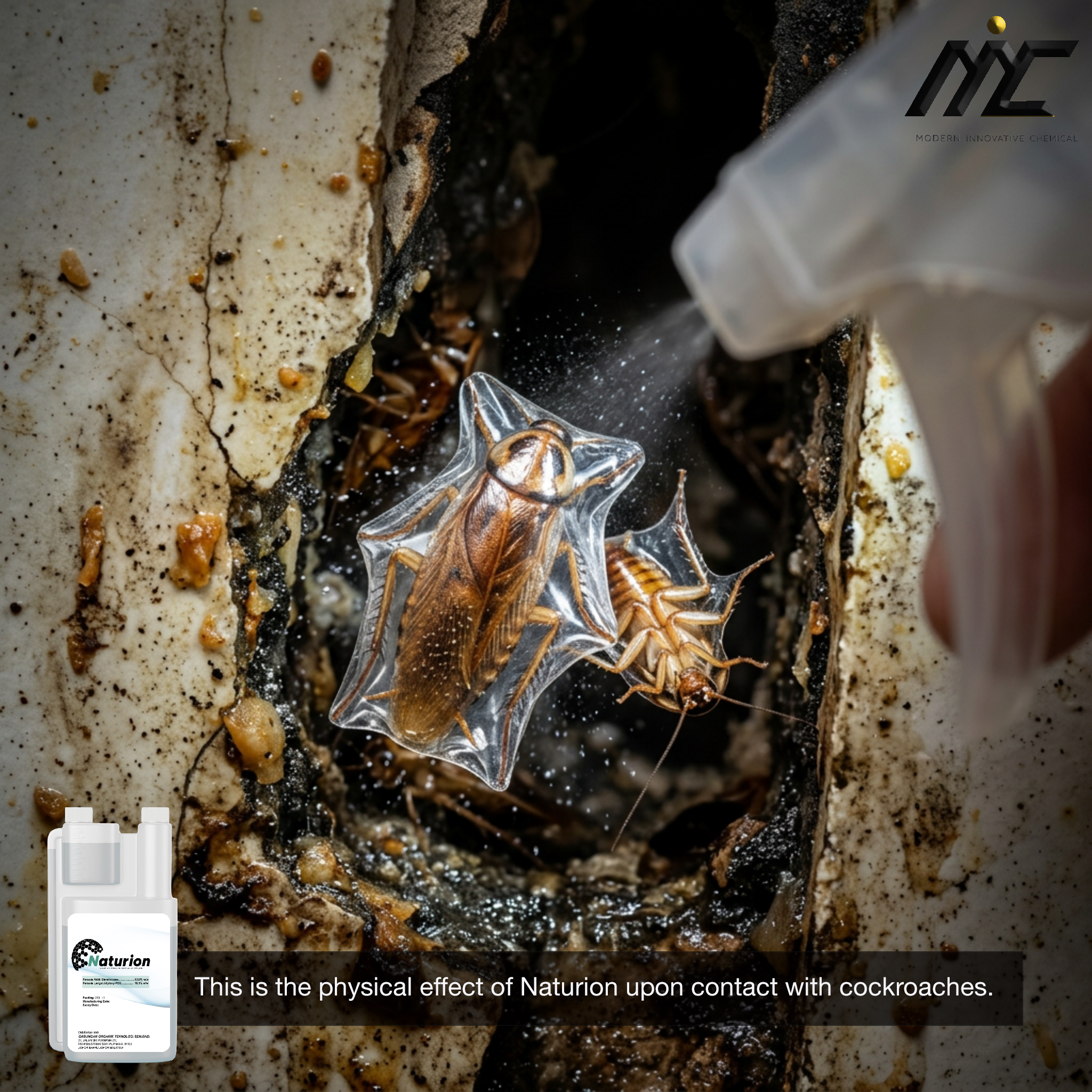
Unlocking Application Access into the Core Sanctuary: Naturion’s primary asset is its absolute physical mode of action. Composed of 100% high-purity macromolecular silicone fluid (CAS 63148-62-9), it contains zero chemical neurotoxins and is recognized internationally as an inert, food-grade substance. This absolute safety profile completely unshackles PCO operators from the regulatory and ethical boundaries governing traditional pesticides. In field operations, technicians are no longer forced to wait passively at the floor level. Because the fluid is non-toxic, non-corrosive, and non-conductive, operators possess the absolute authority to target and inject the fluid directly into active stainless steel seams, equipment motor housings, and deep structural tile cracks.
Overcoming Temporal Eradication: On-Contact Physical Asphyxiation: Naturion operates on a deterministic, "on-contact" kinetic mechanism. Its exceptionally low surface tension allows it to instantly spread and map across the micro-contours of a stainless steel crevice, flooding the harborage and encapsulating the pest population. The macromolecular structure forms a suffocating membrane that mechanically blocks the insect's lateral spiracles (breathing pores), inducing rapid physical asphyxiation in situ. Consequently, pest elimination is achieved instantly during the service window, completely independent of the pests' foraging behaviors or the kitchen's nocturnal sanitation schedule. Even if the stewarding team thoroughly scours the floors hours later, the physical eradication within the structural gaps has already been finalized.
🏛️ MIC Conclusion: Restructuring Premium Authority for Elite PCOs
If our operational mindset remains trapped in "hoping for accidental contact via high-toxicity ground barriers," we will remain trapped in a cycle of downward price erosion and unceasing customer complaints.
True professionalism in modern pest management means auditing the physical boundaries of an F&B kitchen and mapping it against pest ecology. The core issue is not pesticide resistance; it is a profound spatial and temporal misalignment of the active chemistry.
MIC (Modern Innovative Chemical) advocates for high-compliance, non-toxic physical technologies that grant field technicians the unassailable authority to strike the core sanctuary. Shifting from passive ground reliance to active harborage eradication is the definitive scientific methodology to build technical barriers, command premium pricing, and secure absolute client retention.