
Did You Know Chlorpyrifos Has Been Banned in Malaysia? Why the Ban, and What Every PCO Must Know

In the Pest Control Operator (PCO) industry, Chlorpyrifos was once widely used for subterranean termite control and general pest management due to its low cost and long residual effect.
However, times have changed. From stringent rulings by international environmental agencies to strict enforcement by Malaysian authorities, the era of Chlorpyrifos is officially over. As a professional PCO, continuing to use or recommend termiticides containing this chemical poses significant legal and licensing risks, while also compromising the health of your clients and their families.
Here is a comprehensive breakdown of official reports and government regulations explaining why this chemical is being phased out, and how your business can stay compliant.

1. Global Precedent: US EPA Takes Decisive Action to Protect Children's Health
On the international stage, the United States Environmental Protection Agency (US EPA) issued a landmark ruling revoking all food tolerances for Chlorpyrifos, effectively banning its use in agricultural and food-related applications.
Relying on extensive medical and toxicological research, the EPA confirmed that even low-level exposure to Chlorpyrifos causes irreversible neurodevelopmental effects in fetuses, infants, and children. To uphold strict health and safety standards, the chemical was classified as a high-risk prohibited substance.
🔗 Read Full Report: US EPA Takes Action on Chlorpyrifos Risk
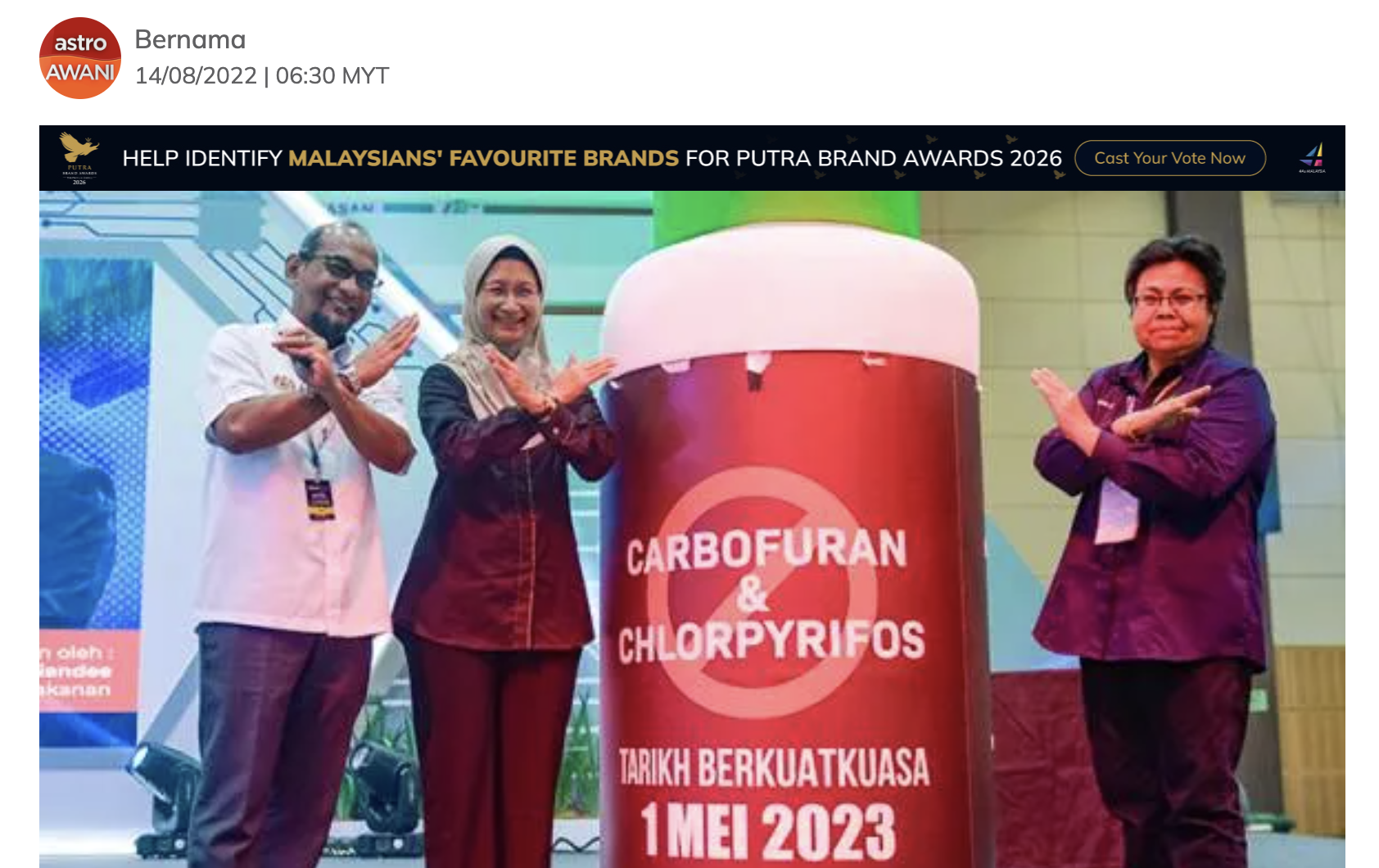
2. Local Media Alert: Ministry Urges Pest Control Industry to Stop Using Carbofuran & Chlorpyrifos
Malaysian authorities have actively clamped down on this active ingredient. According to a report by Astro Awani, the Ministry of Agriculture and Food Industries (MAFI) issued an official directive instructing all agriculture and pest control industry players to immediately cease using Carbofuran and Chlorpyrifos.
The report highlighted that Chlorpyrifos not only poses severe Maximum Residue Limit (MRL) issues in food safety, but its pungent odor and high toxicity present significant public health hazards. The government continues to push for myGAP standards and green pest management solutions, requiring the industry to transition toward safer alternatives.
🔗 Read Full Report: Astro Awani: Pemain industri pertanian diminta henti penggunaan racun Carbofuran, Chlorpyrifos
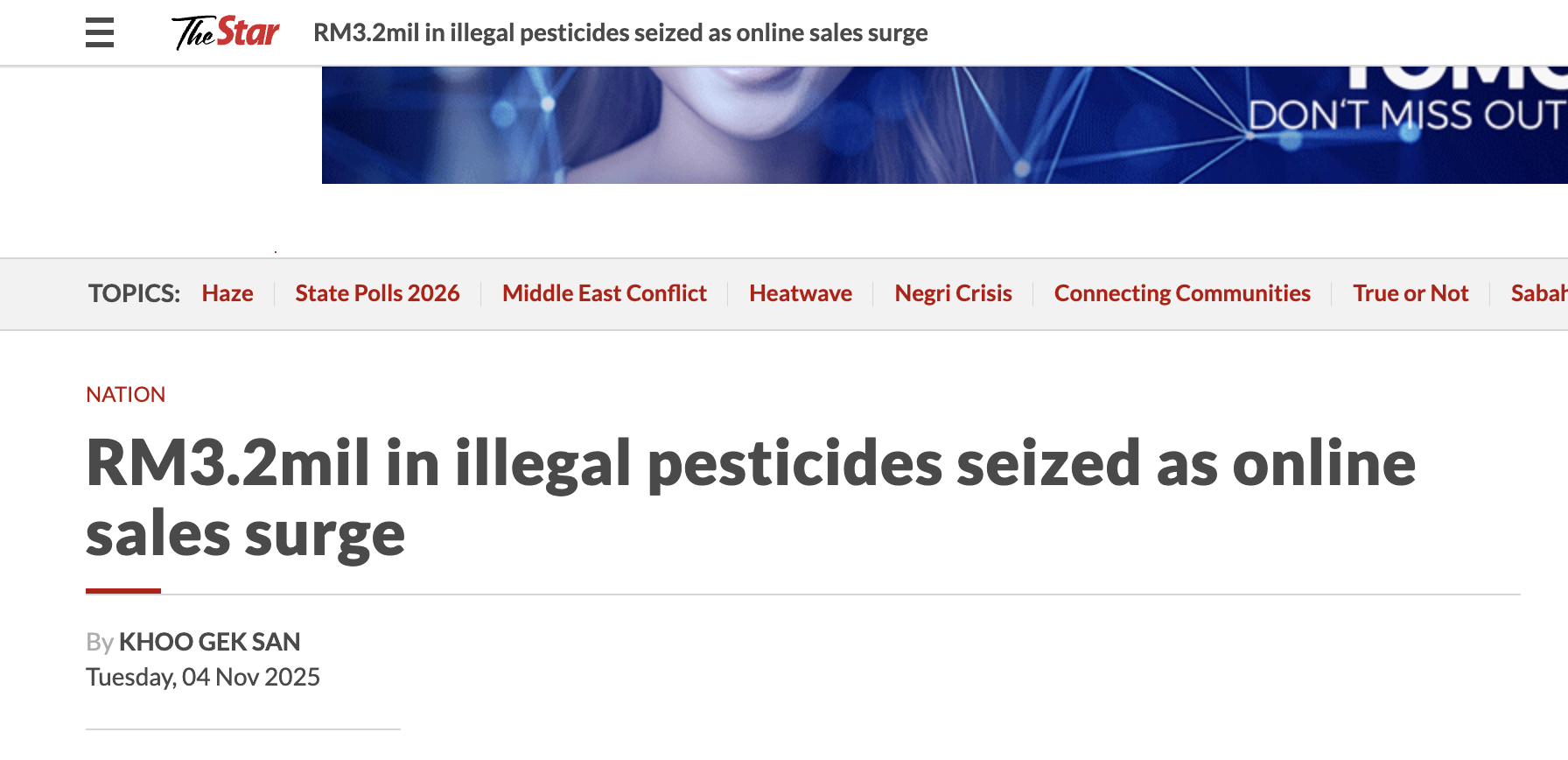
3. Government Crackdown: RM3.2 Mil Seized in Unregistered & Illegal Pesticides
This ban is actively enforced. According to The Star, enforcement joint-operations led by the Department of Agriculture seized over RM3.2 million worth of illegal and unregistered pesticides over a 5-year period.
With the surge of online sales and e-commerce platforms, illicit pesticides have infiltrated the market. Agriculture Ministry officials stated that in line with ASEAN agreements, Malaysia has initiated a phased elimination plan for 9 Highly Hazardous Pesticides (HHPs) between 2025 and 2030. Authorities are actively monitoring digital platforms and inspecting chemical compliance within the pest control sector.
🔗 Read Full Report: The Star: RM3.2mil in illegal pesticides seized as online sales surge

4. Official DOA Mandate: Complete Deregistration & Ban by July 1, 2026
To provide clear regulatory guidance, the Pesticide and Fertilizer Control Division (BKRPB) of Jabatan Pertanian Putrajaya published the official gazette: 《Senarai Racun Makhluk Perosak Yang Telah / Bakal Ditamatkan Pendaftaran Di Malaysia》.
PCOs must take note of these critical regulatory deadlines:
2023 (Restricted Use Phase): The Department of Agriculture formally declared Chlorpyrifos banned for agricultural use (Tidak lagi dibenarkan untuk kegunaan pertanian), permitting temporary transition use only in public health and urban pest control (such as subterranean termites).
July 1, 2026 (Total Phase-Out Deadline): As specified in the official gazette, Chlorpyrifos (registered as an Insecticide / Termiticide - Racun Anai-Anai) will face complete deregistration (Ditamatkan Pendaftaran) effective July 1, 2026. Beyond this date, importing, manufacturing, selling, or applying Chlorpyrifos in any pest control project across Malaysia will be entirely illegal.
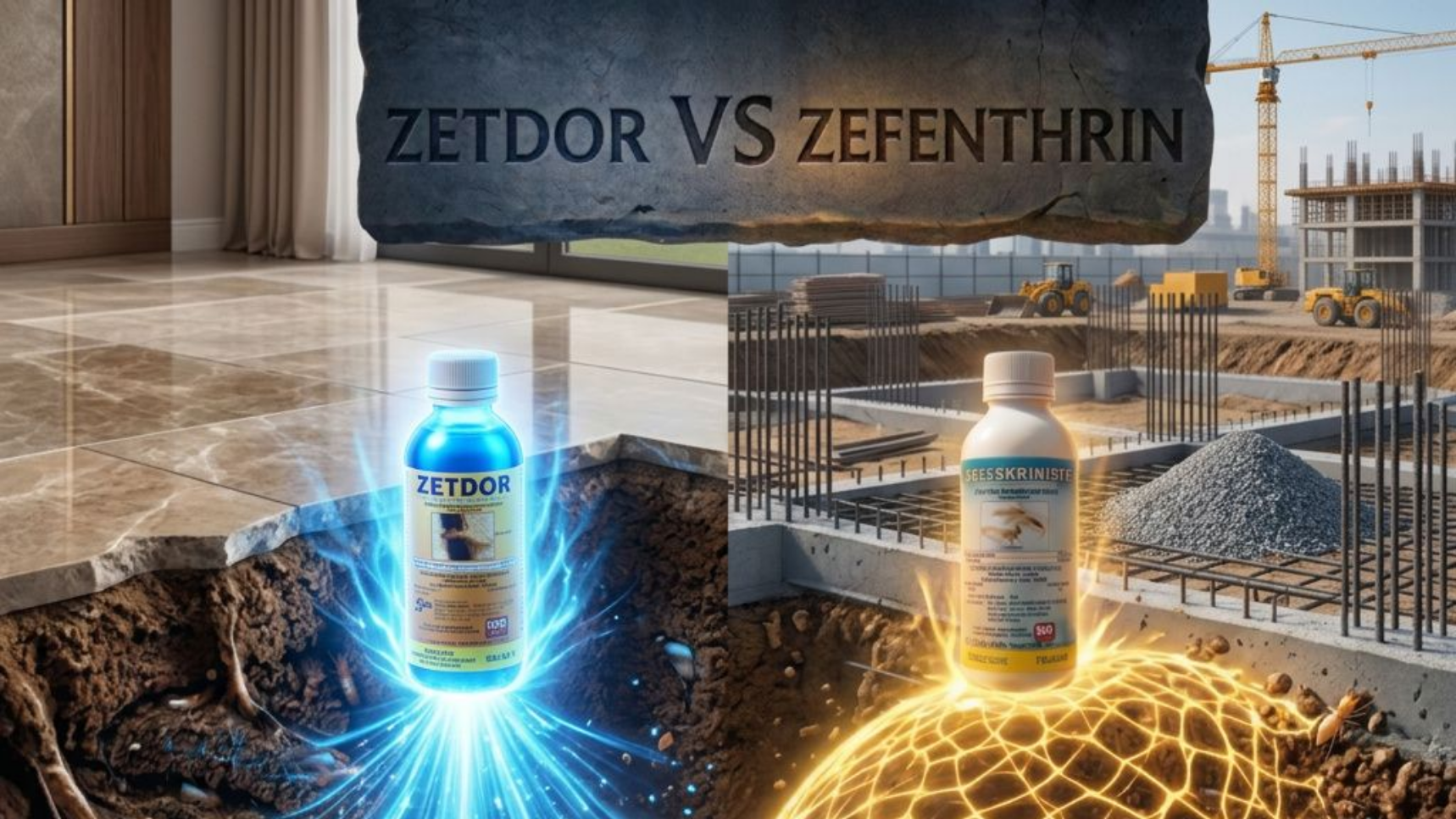
5. Transitioning to Compliance: MIC's Eco-Friendly, Low-Toxicity Alternatives
As the industry moves away from banned chemicals, PCOs face increasingly strict client audits (such as ISO, HACCP, and GMP). Utilizing compliant, low-toxicity, and highly effective non-repellent solutions is essential for winning client trust and safeguarding your business operations.
As a trusted provider of pest control solutions, MIC offers industry-leading alternatives fully compliant with the latest Department of Agriculture regulations:
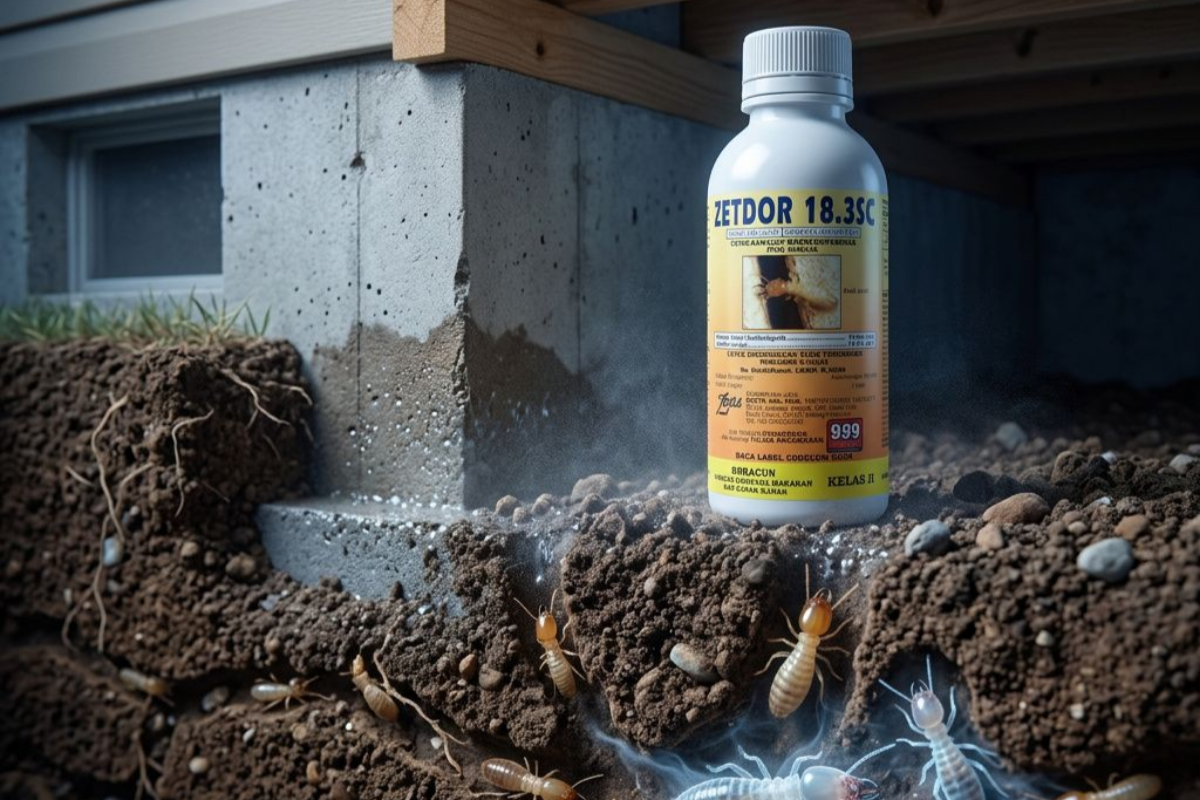
🛡️ Zetdor 18.3 SC (Imidacloprid)
Core Advantage: Specifically formulated for advanced subterranean termite management. Features a low-toxicity, odorless, non-repellent formulation that termites cannot detect.
Cascade Effect: Leverages social grooming and trophallaxis habits among termites to transfer the active ingredient throughout the colony, achieving complete colony elimination.
Safety & Compliance: Fully meets modern environmental and audit standards. Odorless formulation makes it ideal for residential homes, schools, hospitals, and food manufacturing facilities.
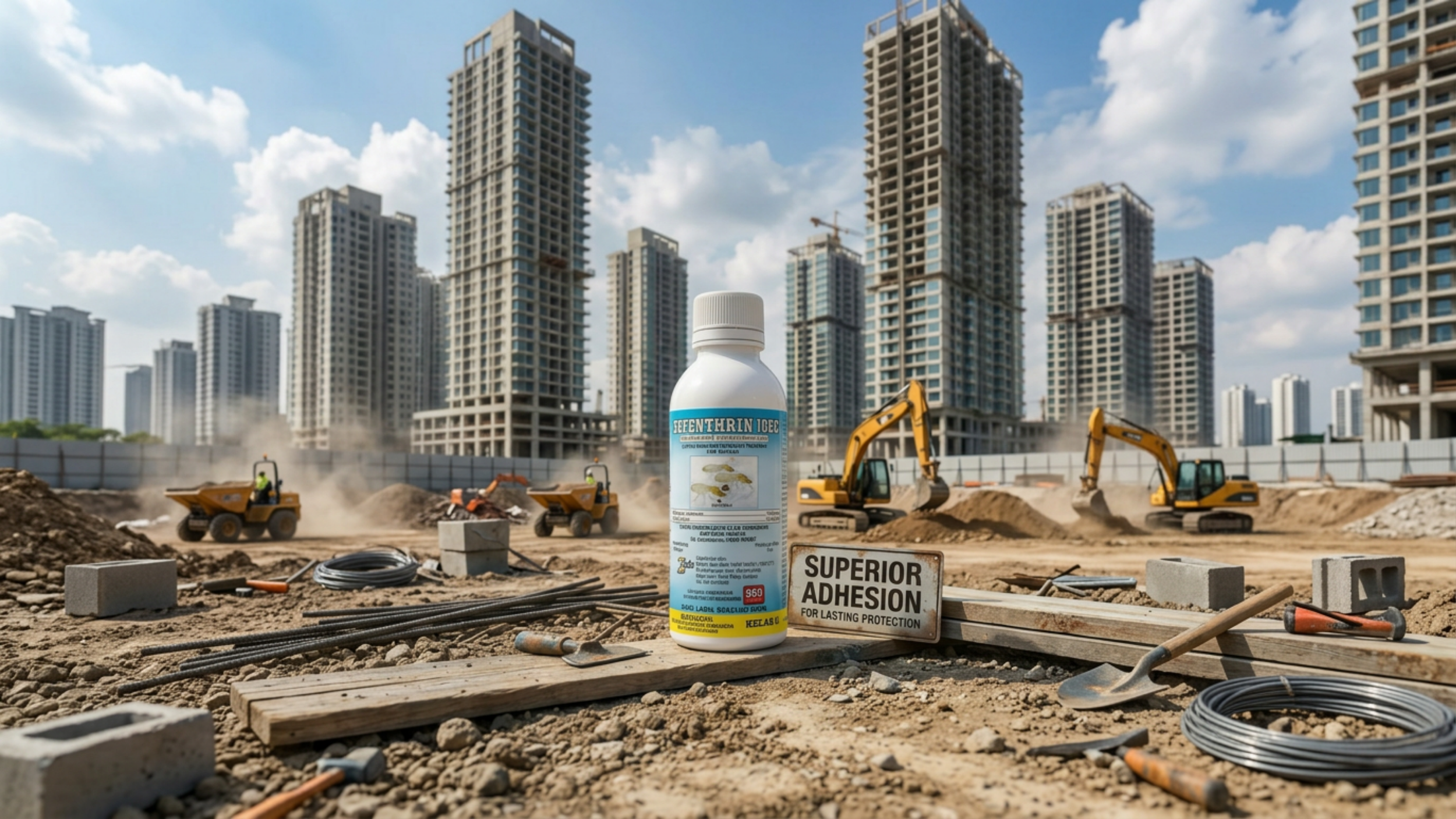
🛡️ ZEfenthrin 10 EC (BIfenthrin)
Core Advantage: A highly efficient, broad-spectrum barrier termiticide engineered for pre- and post-construction termite protection and urban pest management.
Superior Soil Binding: Binds tightly to soil particles, preventing leaching via groundwater to deliver a long-lasting, reliable chemical barrier.
Cost-Effective Upgrade: An ideal compliant substitute for outdated chemicals, enabling PCOs to maintain strong profit margins while fully adhering to DOA regulations.
Conclusion
The elimination of Chlorpyrifos is an irreversible regulatory shift and a necessary step toward a greener, safer, and more compliant pest control industry.
Do not wait for enforcement inspections or audit Non-Conformance (NC) citations!
Contact MIC today to upgrade your termiticide inventory with Zetdor 18.3 SC and Bifenthrin 10 EC—providing your clients with safer, compliant, and superior pest control solutions!