
Introduction: Why 90% of Pest Control Companies Shy Away from Farms and Large Warehouses
Throughout my 13 years in the pest control industry, working shoulder-to-shoulder with leading Pest Control Operators (PCOs), I have handled countless pest management challenges across the Food & Beverage (F&B) sector.
From frontline installations of Insect Light Traps (ILTs / Fly Traps) and Tamper-Resistant Bait Stations (TRBS) for rodent monitoring and control, to tailored chemical formulations for routine residual spraying—frankly speaking, operational protocols and case studies for managing general pests are exceptionally mature in today’s market, with extensive experience readily available.
However, when it comes to Poultry Sites and Large-Scale Grain/Food Warehouses (Warehouses & Grain Mills), systematic and structured insights are rarely shared within the industry.
In fact, this domain remains an unchartered "deep-water zone" that most pest control operators actively avoid. Why? Because the pest ecology in warehouses and agricultural facilities is vastly more intricate than in conventional restaurants:
High Barrier to Technical Knowledge & Expertise: It demands specialized knowledge in pest ecology, along with the ability to navigate sprawling structural blind spots and manage sudden, explosive infestations.
Stringent External Audit Standards: Whether undergoing pollution-free farm audits or rigorous food manufacturing certifications—such as HACCP, GMP, or ISO 22000—the compliance thresholds for chemical application are uncompromising. Formulations must strictly prevent contamination of food-contact surfaces, remain free of harsh solvent odors, and carry verified, authoritative certifications.
Zero Room for Error: The wrong chemical application or an overlooked structural pocket can lead to failed customer audits, costly product recalls, or, in worst-case scenarios, the outright condemnation of entire grain batches or severe livestock losses.
For these reasons, nearly 90% of pest control service providers in Malaysia favor standard F&B accounts with higher error tolerance and streamlined processes, deliberately steering clear of the far more demanding poultry and industrial warehousing sectors.
Yet the reality remains: for many on-site Warehouse Managers and Farm Directors, asking "How can we resolve persistent pest infestations efficiently, safely, and in full compliance?" is an urgent question they face almost every day.
In this article, drawing from 13 years of field-tested experience and industry insights, I have distilled the practical takeaways and core methodologies for managing poultry farms and large food warehouses, offering a structured reference for both industry peers and enterprise decision-makers.
1. The Common Culprits in Warehouses and Poultry Sites: Darkling Beetles and Persistent Cockroaches
People often ask me: Why discuss poultry sites and grain mills or food warehouses together?
On the surface, one is a live-animal farming environment and the other is a processing and storage facility. Yet, from the perspective of Pest Ecology, they share striking commonalities:
Abundant Organic Carbon Loads: Continuous presence of feed remnants, grain flour dust, and high-protein organic matter;
Consistent and Favorable Microclimates: Relatively stable temperature and humidity levels ideal for insect breeding;
Complex Structural Havens and Mechanical Dead Zones: Insulation sandwiches, bulk conveyance systems, and intricate cable trunking networks.
In such breeding grounds, two primary pest groups emerge as the most pervasive and destructive:
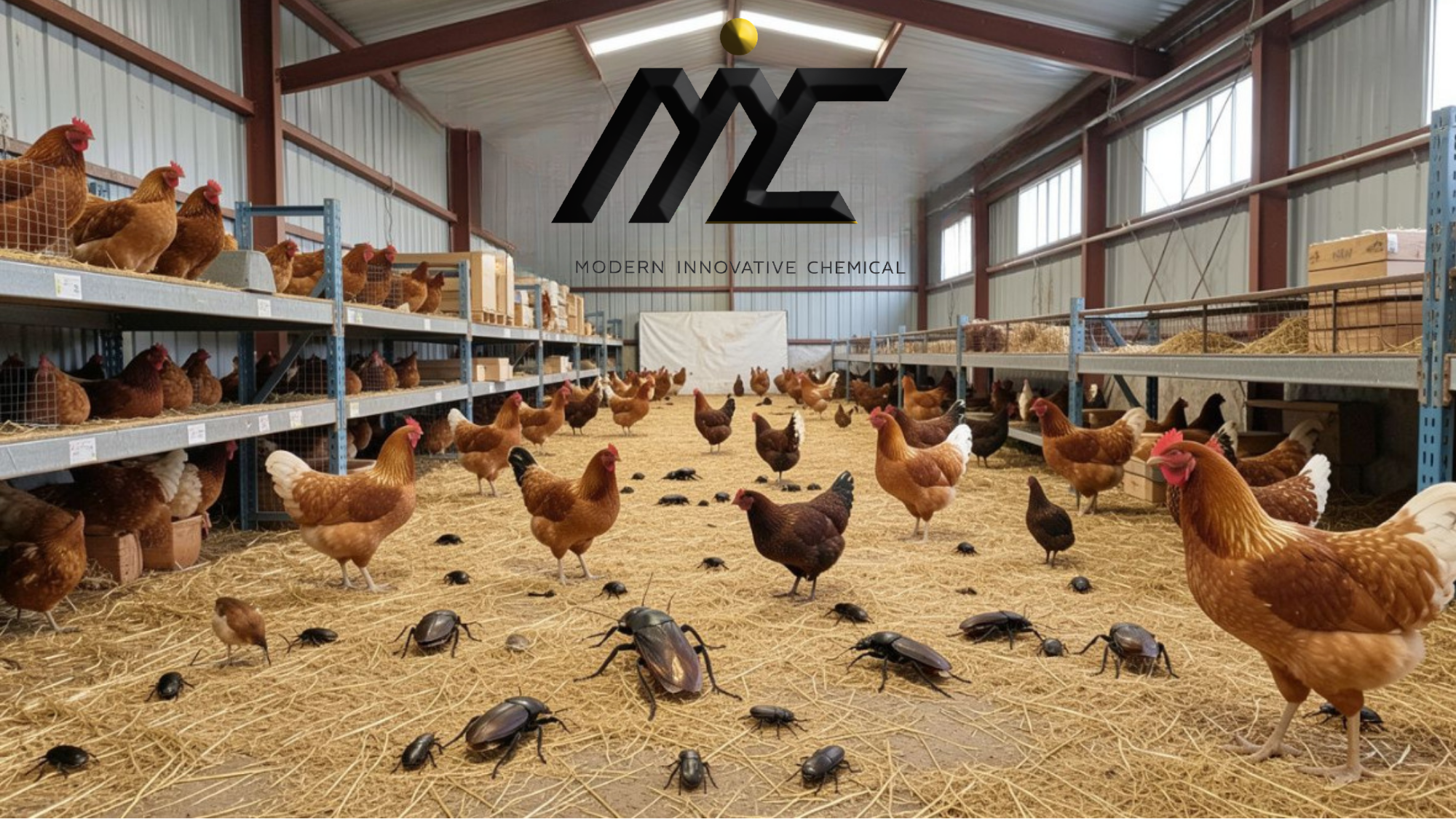
1. The Lesser Mealworm / Darkling Beetle (Alphitobius diaperinus)
Hazards in Poultry Sites:
They proliferate exponentially within deep litter, manure piles, and insulation cavity walls. Both adults and larvae bore directly into foam insulation, severely compromising the thermal structural integrity of the poultry house. More critically, they act as high-risk biological vectors for devastating pathogens, including Salmonella, Escherichia coli, and Coccidia.
Hazards in Grain Mills and Food Warehouses:
They inhabit bucket elevator pits, conveyor boot seams, pallet underbellies, and inaccessible accumulation zones with flour residue. Feeding directly on grain and finished flour, both adults and larvae degrade product quality and taint commodities with a pungent, musty odor.
Operational Control Bottlenecks:
This beetle has developed documented, widespread physiological resistance to standard synthetic pyrethroids. Routine surface spraying fails to penetrate deep harborages, leaving larvae and pupae untouched within underlying structures.
2. Persistent Cockroach Populations (American & German Cockroaches)
They congregate within transformer rooms, Motor Control Centers (MCC Rooms), motor mounting gaps, drainage trench networks, and interfaces where dust and moisture accumulate. Beyond acting as mechanical vectors transmitting pathogens into food and feedstuffs, cockroaches produce acidic secretions and frass that corrode electronic circuitry, frequently leading to short circuits, system downtime, and severe fire hazards.
2. Core Chemical Principles and Professional Product Recommendations
Applying chemical treatments in sensitive grain storage facilities and modern poultry houses requires strict adherence to two non-negotiable baselines: first, prioritizing products certified under international HACCP food safety standards; second, choosing low-toxicity formulations that mitigate solvent residues and environmental hazards.
To combat the two persistent pest complexes outlined above, I have structured the operational protocol into the following targeted chemical lineup:
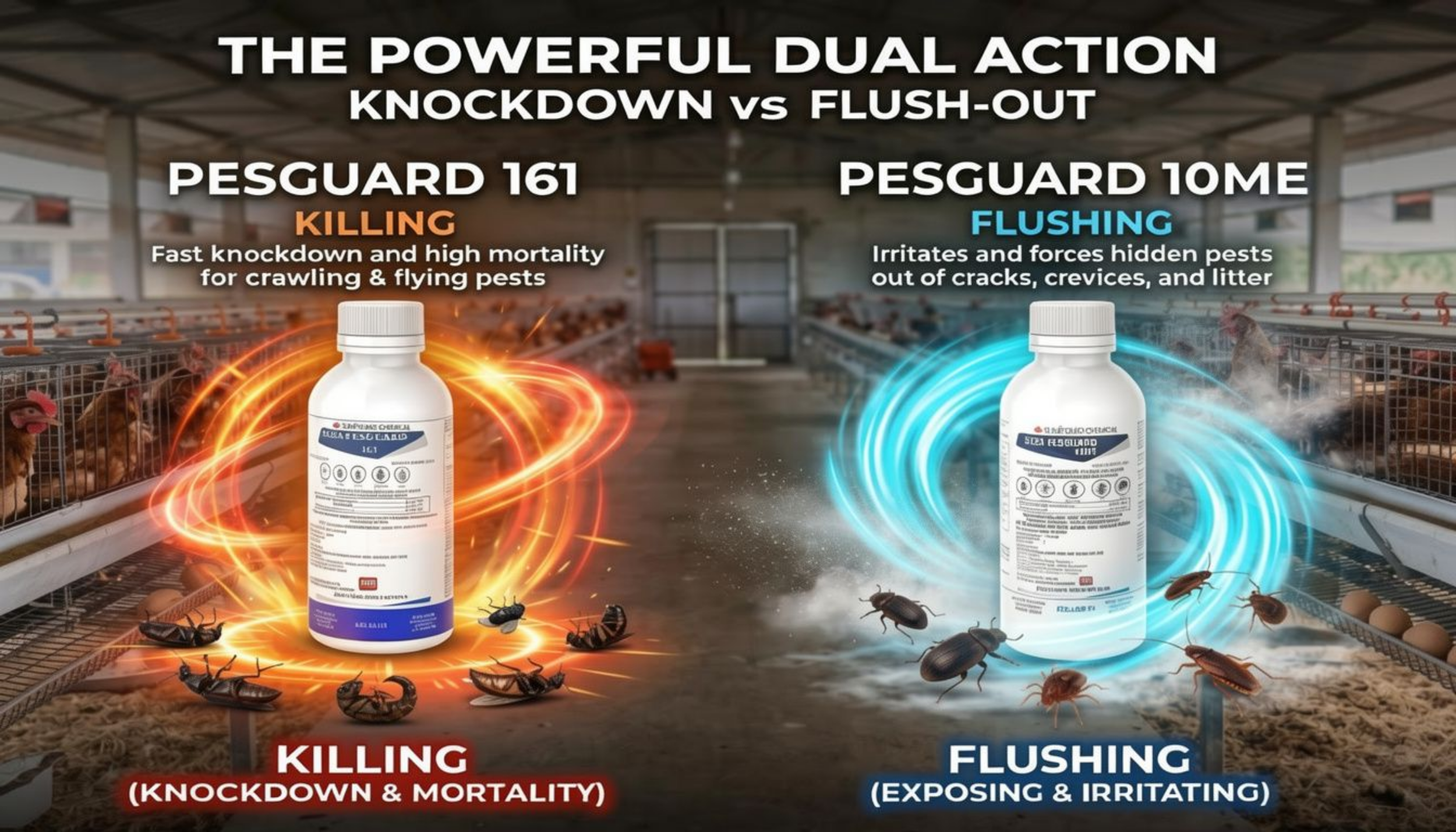
Solution 1: Adult Fast Knockdown and Residual Barrier Spraying —— Pesguard 161
Product Classification & Credentials:
Class III (Harmful) | Certified by HACCP International for Food Safety | Emulsifiable Concentrate (EC)
Target Pests & Regulatory Registration:
Officially registered under the Pesticides Board of Malaysia (LRMP) for stored-product beetles (Kumbang), explicitly covering the Red Flour Beetle (Tribolium castaneum), Rice Weevil (Sitophilus oryzae), and Cigarette Beetle (Lasioderma serricorne).
While the label does not explicitly itemize the Darkling Beetle by name, Alphitobius diaperinus belongs to the exact same family (Tenebrionidae), sharing identical physiological mechanisms and resistance profiles.
Formulation Technology & Operational Function:
Formulated with a synergistic dual-pyrethroid blend: $d$-Tetramethrin 4.4% w/w + Cyphenothrin 13.2% w/w.
Widely recognized across the professional pest management industry for delivering superior, rapid Knockdown and aggressive Flush-out efficacy.
Field Application Scenarios:
It serves as the frontline workhorse for PCOs tackling persistent cockroach harborages. It is exceptionally well-suited for immediate suppression during acute infestation spikes, deep crack-and-crevice cleanouts, and wide-band perimeter barrier spraying along building foundations.
📁 [Downloadable Technical Documents on MIC Official Website]: HACCP Certificate, Safety Data Sheet (SDS), Official Product Label, and Technical Product Brochure.
Solution 2: Space Misting and Deep Flushing —— Pesguard 10ME
Many field operators have encountered this exact scenario: even with a potent knockdown agent like Pesguard 161 on hand, conventional pressure sprayers simply cannot reach beetles and cockroaches harboring deep within insulation cavities, high-level structural blind spots, or the external crevices of overhead conduit runs. Directly applying liquid residual sprays in these areas often results in excessive runoff and chemical wastage.
Therefore, prior to establishing ground-level residual barriers, an initial spatial Flush-out treatment must be conducted. This forces deeply hidden pests out onto exposed surfaces where they can be effectively targeted and eliminated.
For this demanding space-flushing challenge, the single formulation I recommend without reservation is Pesguard 10ME:
Product Classification & Credentials:
Class IV (Lowest Toxicity Hazard Category) | Certified by HACCP International for Food Safety | Micro-Emulsion (ME / Water-Based)
Key Strategic Advantages:
Unrivaled Market Position: Out of thousands of registered pest control products in Malaysia, it is one of the exceptionally rare Class IV low-toxicity formulations officially approved for Ultra-Low Volume (ULV / Cold Fogging) applications.
Powered by high-purity 10.0% w/w $d$-phenothrin, it leverages advanced water-based micro-emulsion technology, completely eliminating the pungent odor and flammability risks associated with conventional organic solvent carriers.
Operational Scenarios & Safety Profile:
Its official product label explicitly registers ULV space spraying parameters for stored-product pests such as the Cigarette Beetle (Lasioderma serricorne).
When atomized into fine aerosol droplets (typically 10–25 microns), the mist remains suspended in the air column, drifting into overhead pipe racks, ceiling voids, and complex machine housings. It induces intense physiological irritation upon contact, aggressively flushing out both exposed and harbored adult populations.
Specifically engineered for sensitive food processing environments with rapid natural breakdown pathways, it leaves virtually no harmful airborne residues behind. When facility protocols mandate space misting, Pesguard 10ME is the premier choice that flawlessly balances stringent food audit compliance with deep structural penetration.
3. The First Line of Defence: An Ultra-Long Residual Barrier Engineered for Persistent Cockroaches —— Pesguard Alpha 5FL
The previously discussed Pesguard 161 and Pesguard 10ME demonstrate remarkable performance in rapid adult beetle eradication and deep harborage flushing. However, within a robust Integrated Pest Management (IPM) framework, relying solely on indoor reactive treatments is never enough. If outside populations of cockroaches and beetles continuously infiltrate the facility, interior pest pressures can never be truly eliminated.
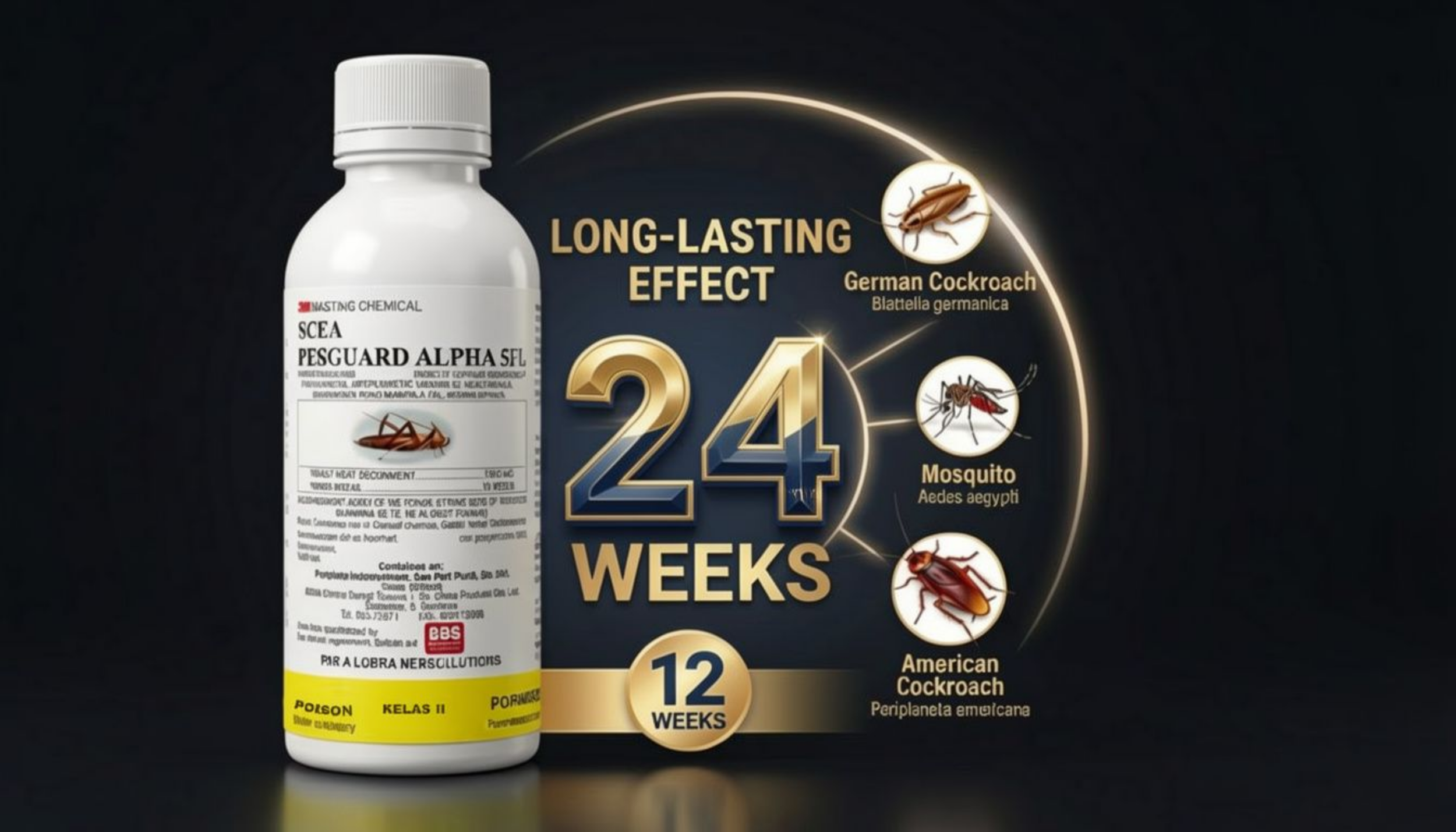
Therefore, whenever a client’s budget permits, I consistently advocate incorporating this specialized weapon—widely regarded as being engineered specifically for cockroaches: Pesguard Alpha 5FL.
🛡️ Why Choose Pesguard Alpha 5FL as the Premier Perimeter Defence?
Exceptional Residual Longevity:
Powered by high-purity Esfenvalerate 4.9% w/w, it utilizes advanced Flowable Suspension Concentrate (FL) technology.
Once applied and dried onto concrete plinths, exterior perimeter walls, and masonry substrates, it leaves behind a resilient micro-crystalline deposit. This protective layer resists direct sunlight degradation and dust absorption, sustaining a formidable residual barrier for 3 to 6 months.
The Unique Distinction: "Class II Toxicity, Yet Certified by HACCP International":
Due to its potent insecticidal activity, it is officially classified as a Class II formulation.
Yet, it is entirely unlike conventional Class II agricultural chemicals: it is water-based, low-odor, free of harsh organic solvents, and holds authoritative HACCP International Food Safety Certification. This guarantees that even when deployed around food manufacturing plants or large grain distribution terminals, it meets the highest compliance benchmarks during external audits.
Constructing an Impenetrable Perimeter Barrier:
In field practice, I recommend applying it extensively along building perimeter foundations, loading bay skirtings, exterior expansion joints, perimeter drainage channels, and threshold gaps beneath external ingress points.
This perimeter treatment actively intercepts and eliminates invading pests—especially large American cockroaches (Periplaneta americana) and ground-dwelling crawling beetles—before they can breach the building envelope. By establishing a true First Line of Defence, it cuts off pest ingress right at the source!
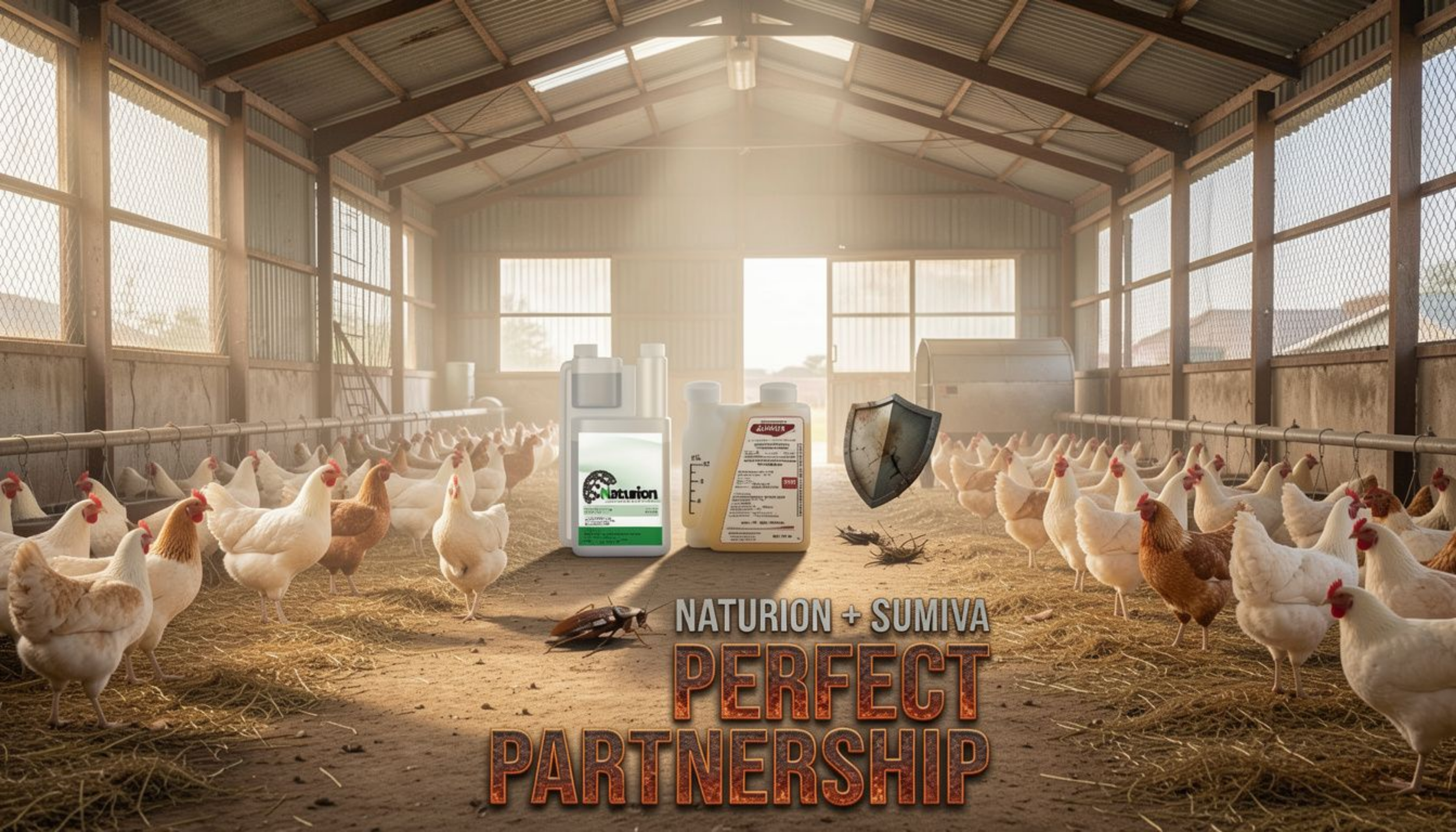
4. Breaking Traditional Chemical Limits: Pure Physical Action and Zero Residue "Resistance Terminator" —— Naturion
The three core liquid products introduced above—Pesguard 161, Pesguard 10ME, and Pesguard Alpha 5FL—all originate from Japan’s Sumitomo Chemical, representing high-tier defensive solutions engineered specifically for large-scale commercial warehousing and general pest management under international HACCP certifications.
However, in high-standard food warehouses and organic farm environments, beyond these chemical tools from multinational manufacturers, there is an indispensable and highly specialized non-toxic innovation that cannot be overlooked: Naturion.
💧 NATURION's Pure Physical Mechanism: The "Micro-Film Suffocation" Trapping Pests Without Escape
Traditional insecticides rely on neurotoxins, which readily induce chemical resistance among insect populations. In contrast, Naturion is a completely non-toxic, odorless, and zero-residue physical control liquid:
Ultra-Low Surface Tension and Micro-Film Encapsulation:
Naturion exhibits exceptional wetting and spreading capabilities (with surface tension as low as approximately $20.5\text{ mN/m}$). When diluted and sprayed directly onto crawling insects (such as Darkling Beetles, persistent cockroaches, etc.), the solution rapidly spreads across the cuticle, instantly forming a dense, impermeable ultra-thin micro-film.
Physical Suffocation and Rapid Dehydration:
This micro-film completely blocks the insect's spiracles (abdominal respiratory system) within 10 to 30 seconds, cutting off oxygen uptake and causing death through mechanical suffocation and rapid desiccation. Because it does not operate via biochemical or neurotoxic pathways, pests cannot develop physiological resistance.
🌿 Food-Grade Safe Ingredients and Stringent Certification Backing (The Safety Benchmark)
Many clients often ask: If it eliminates pests so quickly, is it truly safe?
Naturion’s primary active ingredient is 82.0% Dimethicone, carrying an exceptionally high safety profile:
Skincare and Food-Grade Composition:
Dimethicone is widely utilized in high-end cosmetic formulations and infant personal care products. In the food sector, it is officially authorized as a compliant food additive in Malaysia and globally, frequently utilized as a food-grade anti-foaming agent in edible oils and processed foods.
Authoritative Halal and Non-Animal Source Verification:
The ingredient is recognized as a compliant Halal material under Singapore’s MUIS standards and international Halal E-Code frameworks. It is 100% pork-free and contains no animal fats or oils (non-animal derived), fully satisfying the stringent Halal integrity and food safety audits required by major grain mills and food processors across Malaysia.
A 13-Year Industry Perspective:
With darkling beetles and cockroaches exhibiting escalating physiological resistance to standard synthetic pyrethroids and organophosphates, conventional chemical-only approaches increasingly fall short. When confronting chronic, high-frequency infestations where repeated spraying fails, purely mechanical physical solutions like Naturion represent the definitive answer to breaking chemical resistance bottlenecks.
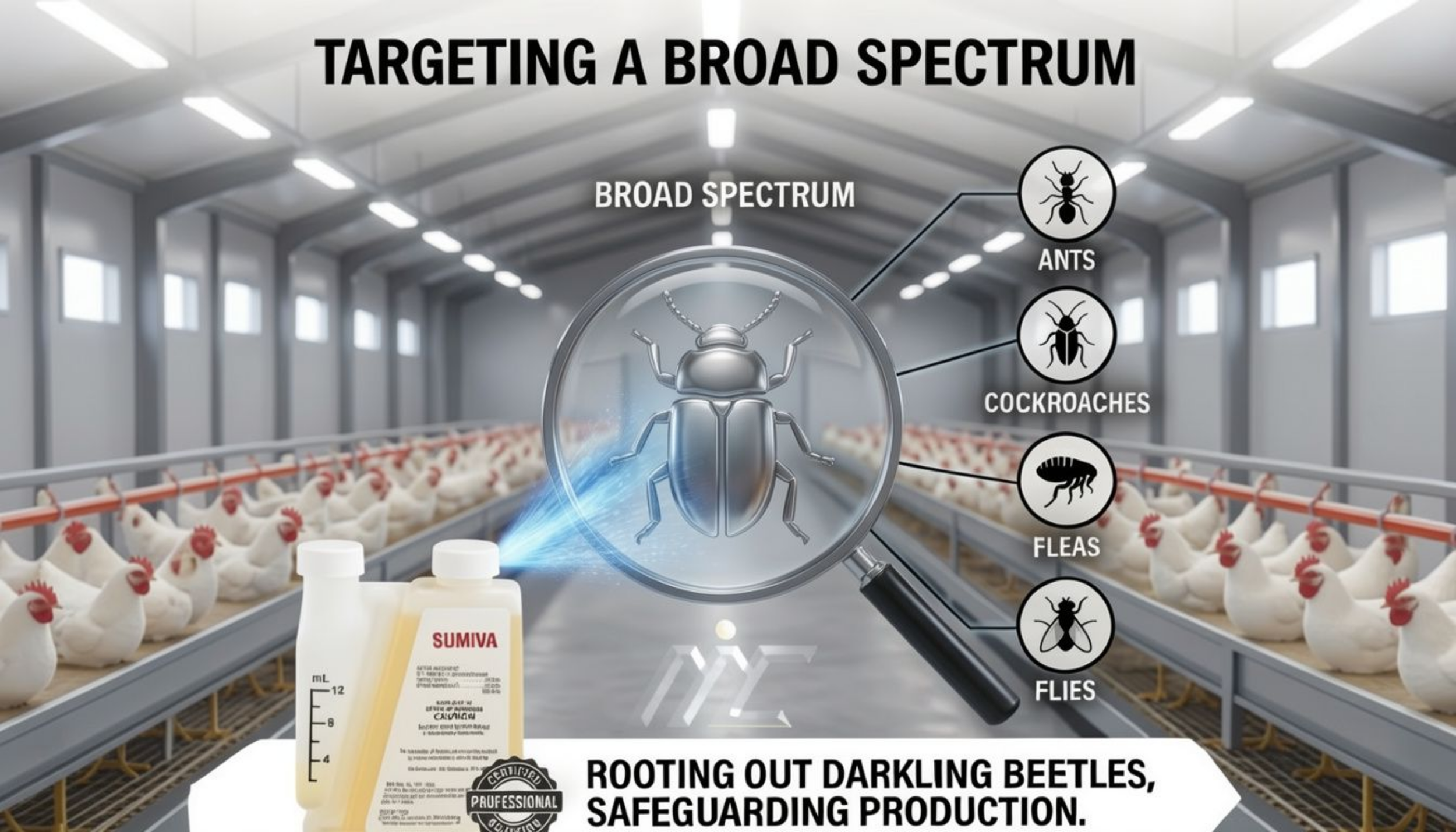
5. Eliminating Larvae and Breaking Generational Cycles: The Reproduction-Halting Growth Regulator —— Sumiva (Nyguard)
While Naturion offers distinct physical advantages—being completely non-toxic, food-grade safe, and capable of overcoming physiological resistance—its lack of chemical residual persistence is inherently a double-edged sword. In modern poultry facilities or sprawling food warehouses spanning thousands of square meters, requiring operational crews to spray Naturion on a daily basis is simply not viable.
To transform this non-toxic physical approach into sustainable, long-term protection, it must be paired with an exceptional strategic counterpart from Sumitomo Chemical: the forthcoming flagship formulation, Sumiva.
🧬 Not a Conventional Poison, but a Precision "Biological Lock" on Pest Life Cycles
Sumiva is not a neurotoxic insecticide designed for acute knockdown; it is a highly selective Insect Growth Regulator (IGR):
Core Active Ingredient: High-purity Pyriproxyfen (a juvenile hormone mimic / analogue).
Official Regulatory Registrations: On its official Malaysian label (LRMP), Sumiva is explicitly registered for livestock and poultry environments to control the Darkling Beetle (Kumbang Hitam / Alphitobius diaperinus), Fly Larvae (Larva lalat), and the German Cockroach (Lipas / Blattella germanica).
The "74-in-1" Proven Powerhouse Across the Pacific (Nyguard): In the United States under stricter EPA oversight, the equivalent formulation (marketed as NyGuard® IGR) is approved for food-handling establishments and commercial warehousing. Its label encompasses interruption of the life cycle across nearly 74 target pest species, covering virtually all stored-product beetles, moths, fleas, and persistent cockroaches.
🔬 The Microscopic Disruption of Sumiva: What Occurs Upon Pest Exposure?
When mixed with water and applied evenly across target surfaces, Sumiva provides up to 6 months of persistent residual inhibition in the field. It dismantles pest populations from the inside out through three distinct biological pathways:
Larval / Nymphal Stage: Incomplete Ecdysis and Suffocation Within the Exuviae
Immature larvae or nymphs (such as darkling beetle mealworms or cockroach nymphs) that ingest or contact Pyriproxyfen experience severe hormonal disruption. During their subsequent molting or pupation cycle, they fail to form viable new cuticle layers, ultimately suffocating and dying trapped within their unshed outer skins.
Sub-lethal Exposure: Severe Morphological Deformities and Population Collapse
Even if an immature insect encounters minute traces of the active ingredient and manages to shed its cuticle, it cannot develop into a functional adult. Instead, it exhibits stunted morphology—such as twisted wings, deformed appendages, or structural carapace failure. These crippled individuals are incapable of competing for food, defending territory, or mating, and are swiftly eliminated from the population.
Adult Stage: Male Infertility and Non-Viable "Dud" Egg Cases
Mature male pests exposed to Sumiva suffer disrupted spermatogenesis, rendering them sterile. Exposed female adults may still produce structurally normal-looking egg cases (oothecae), but these contain non-viable "duds" where embryos arrest development and fail to hatch.
⚠️ The Golden Rule of Using Sumiva: Embrace the "Life Cycle Lag" for True Long-Term Elimination
A realistic expectation must be set for facility managers: deploying Sumiva requires respecting the natural laws of insect population turnover.
Unlike Pesguard 161, it will not induce knockdown or violent convulsions within minutes. During the first 1 to 2 weeks post-application, existing adult insects will continue their normal activities until dying of natural causes. However, by consistently maintaining this IGR barrier, as older adults die off without viable new larvae emerging to replace them, the entire population experiences a steep, catastrophic collapse within 3 to 4 weeks—delivering true, sustainable, long-term eradication!
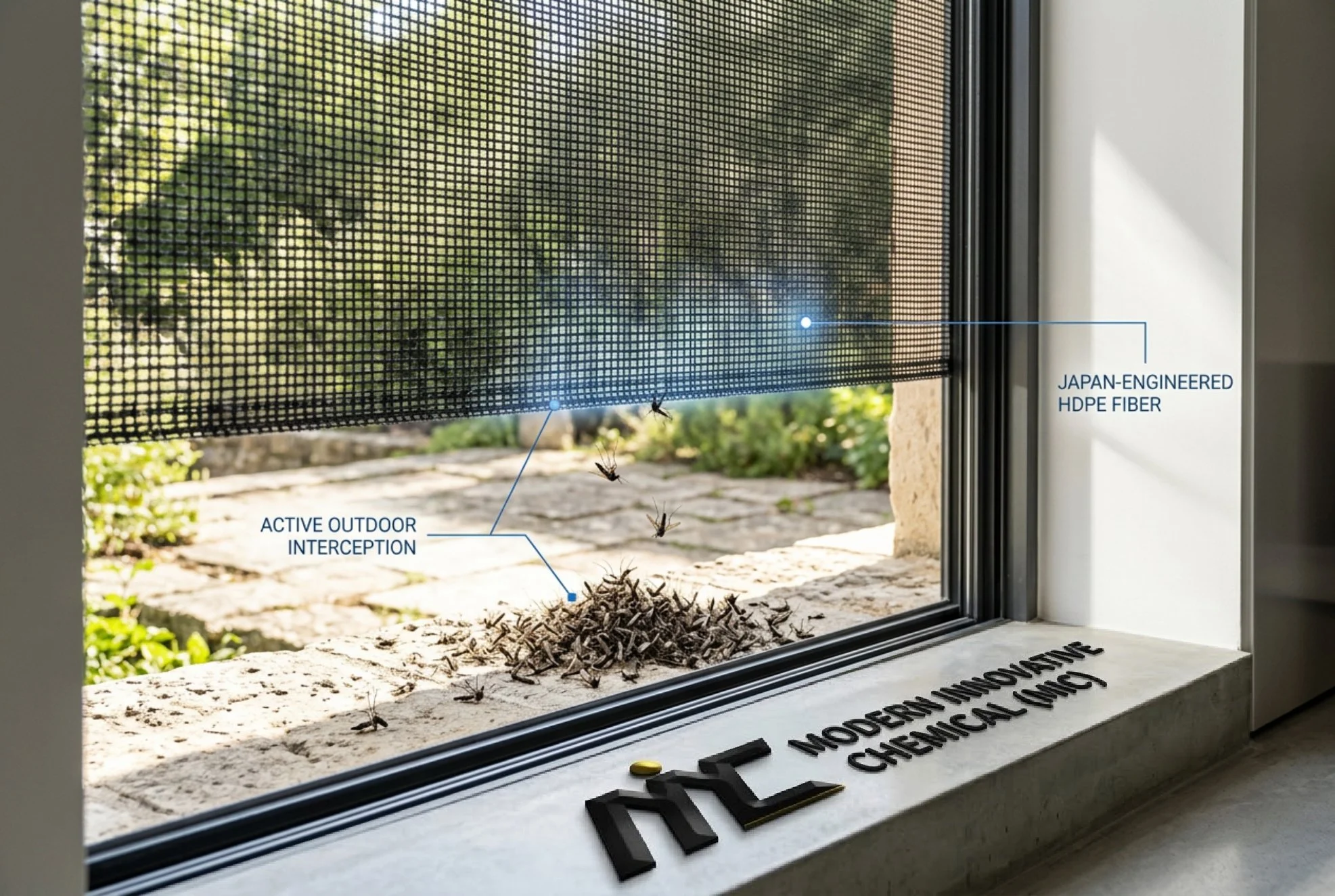
7. The Grand Finale: The Active-Kill "Insecticidal Web" —— Olyset Roll (Olyset Pro)
After exploring liquid residual spraying, space cold fogging, and physical suffocation agents, many professionals inevitably ask: "Is there an approach that does not rely on frequent spraying by workers, yet provides 24/7 continuous interception and eradication of pests?"
The answer is yes. This is embodied in the world-renowned technological achievement developed by Japan’s Sumitomo Chemical —— Olyset Roll (Olyset Pro).
🌍 Born from a WHO-Certified Global Anti-Malaria Legacy
Decades ago, Sumitomo Chemical partnered closely with the World Health Organization (WHO) and global public health institutions to pioneer the groundbreaking Long-Lasting Insecticidal Net (LLIN) for high-transmission malaria zones across Africa. This technology not only protected hundreds of millions of people from vector-borne disease transmission but also earned prestigious global humanitarian and technological distinctions.
Today, this core innovation has been engineered into an industrial-grade, long-lasting insecticidal netting solution (Olyset Pro) tailored specifically for commercial processing facilities, food grain warehouses, and livestock operations:
Core Active Ingredient: High-performance Permethrin 2.0% w/w (synthetic pyrethroid).
High-Tech Controlled Release Technology: Unlike conventional nets that are merely surface-dipped or superficially coated (which wash off rapidly and degrade swiftly under sunlight), the active ingredient is incorporated directly into the polyethylene resin matrix during the monofilament extrusion process.
Self-Replenishing Surface Mechanism: The reservoir of active ingredient within the resin migrates continuously to the filament surface at a molecular level. Even after environmental exposure, weathering, or routine washing, the internal reservoir consistently replenishes surface bio-availability, maintaining robust insecticidal potency for up to 3 years!
⚡ Disrupting Conventional Screening: "Touch the Net, and It Eliminates on Contact"
Standard fly screens or bird netting provide only passive physical barriers; once torn or when doors swing open, pests bypass them unimpeded. Olyset Roll operates under an entirely different paradigm:
Contact Knockdown and Mortality: Pests do not need to ingest anything. The moment an insect lands or crawls across the netting surface, the bio-available pyrethroid rapidly penetrates the tarsal nerve endings, inducing neuro-excitation, knockdown, and complete mortality within minutes.
Exceptional Safety Profile (Class IV / Odorless): Because the chemical is stably locked inside the polymer structure, there are no volatile organic emissions or solvent odors, ensuring superior safety for personnel and non-target mammals, alongside official HACCP International Food Safety Certification!
Proven Broad-Spectrum Efficacy: Official field testing and registration data confirm proven activity against houseflies (Musca domestica), mosquitoes (Aedes & Culex), the Red Flour Beetle (Tribolium castaneum), Rice Weevil (Sitophilus oryzae), termites (Coptotermes gestroi), stored-product moths, and crawling beetles.
🏭 Practical Deployment in Grain Mills and Modern Agricultural Facilities (Fruit & Poultry)
When incorporated during structural retrofits or facility planning, Olyset Roll creates a zero-energy, zero-labor "active barrier":
Warehouse Access Strip Curtains and Ventilation Mesh: Olyset Roll can be fabricated into strip curtains for loading bays, ventilation louver screens, and doorway screens. Nocturnal pests drawn toward building illumination or airflow apertures are intercepted and eliminated upon resting on the mesh, preventing inner structural infestation.
Pallet Underlays and Commodity Covers: The official label specifically supports lining pallets and bulk grain storage containers, creating a physical and chemical zone that prevents cross-infestation of weevils and flour beetles between stacked grain bags.
Orchards and High-Value Fruit Packing Areas: For fruit growers contending with fruit flies and moths, utilizing Olyset Roll as perimeter exclusion screens or sorting shed enclosures maintains ventilation while neutralizing approaching insects, reducing fruit spoilage and loss.
Conclusion: Breaking Free from the Low-Price Race to the Bottom—Building a "Full Life-Cycle Defence" for Food-Grade Warehouses
Reflecting on my 13-year journey across the pest control industry, the core reason nearly 90% of Malaysian PCOs hesitate to take on food warehouses and modern poultry sites comes down to an outdated mindset: attempting to conquer every challenge with a single, generic chemical bottle. When confronted with strict third-party audits and intricate ecological harborages, single-point chemical applications inevitably fail.
A truly professional Integrated Pest Management (IPM) framework—one that satisfies the most demanding international auditors—must be a holistic, multi-layered system that seamlessly integrates active interception, deep elimination, and life-cycle interruption:
Perimeter Exclusion at the Frontier: Pesguard Alpha 5FL establishes a 3 to 6-month, water-based, odorless, and durable residual barrier;
Indoor Deep-Space Flushing: Pesguard 10ME utilizes Class IV ultra-low toxicity cold fogging to dislodge and flush out harbored adults from concealed voids;
Severe Outbreak Suppression: Pesguard 161 delivers aggressive dual-pyrethroid knockdown to swiftly knock down severe pest surges;
Zero-Residue Physical Resistance Breakthrough: Naturion employs nano-scale micro-film suffocation, breaking physiological resistance with zero chemical residues;
Generational Interruption: Sumiva (Nyguard) targets eggs and larvae directly, disrupting insect development and securing up to 6 months of persistent population suppression;
Active Boundary Web: Olyset Roll provides 3 years of 24/7 contact knockdown, actively defending high-risk doors, windows, and ventilation conduits.
These principles represent the field-tested strategies I have refined over years on the ground. I sincerely hope this guide serves as a practical blueprint for warehouse directors, farm managers, and forward-thinking PCO professionals striving for long-term efficacy, structural safety, and uncompromising audit compliance.